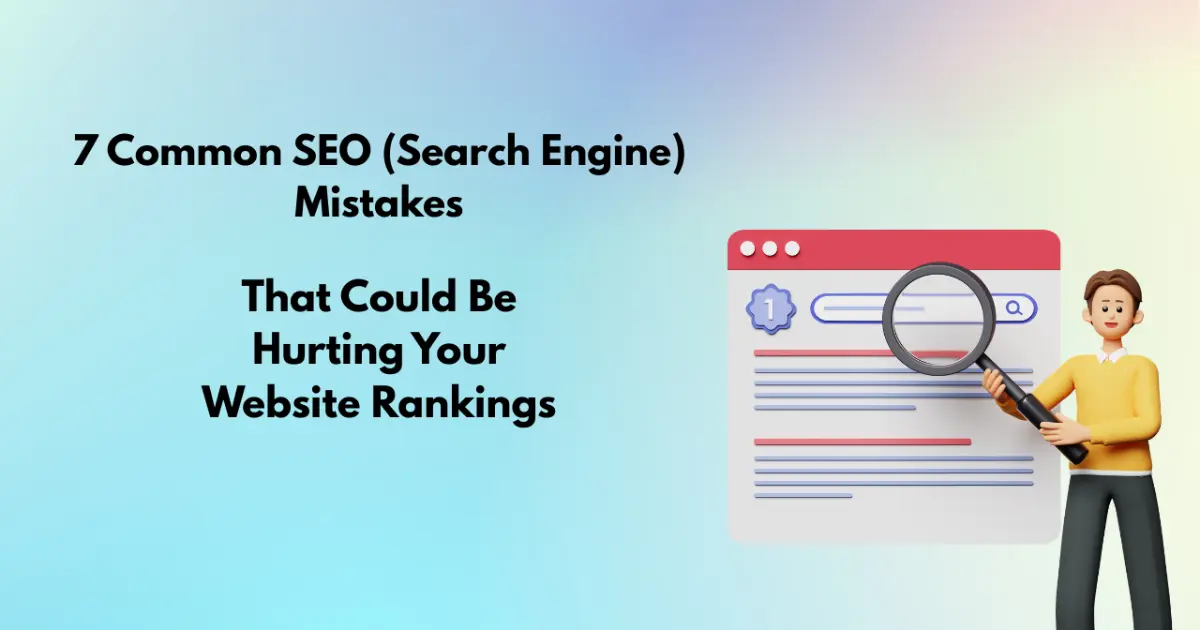
7 Common SEO Mistakes That Could Be Hurting Your Website Rankings
You’ve put a lot of time into creating great content, adding beautiful images, and writing posts you’re proud of—but your website still isn’t showing up on Google the way you hoped. Frustrating, right?
The problem often isn’t your content. It’s small common SEO mistakes that quietly hold your site back from getting the traffic it deserves. Here’s a look at the most common ones and how to fix them.
1. Not Optimizing for Mobile -
Almost everyone uses their phone to browse the web these days. If your site isn’t mobile-friendly, visitors will leave fast—and Google will notice.
How to fix it:
- Make sure your site works well on all screen sizes.
- Keep buttons and links easy to tap.
- Make text readable without zooming.
- Optimize images for faster loading.
A mobile-friendly site isn’t just good for visitors—it’s essential for your Google rankings.
2. Slow Page Speed -
People online don’t like waiting. If your pages take too long to load, visitors will leave—and that hurts your SEO.
How to fix it:
- Compress images to make them smaller.
- Remove unnecessary plugins or scripts that slow your site.
- Use caching and a Content Delivery Network (CDN).
- Test your site speed regularly.
Even a couple of seconds shaved off your load time can make a big difference in keeping visitors around.
3. Using the Wrong Keywords -
Stuffing keywords or targeting the wrong ones can hurt more than help. Just because a term has a lot of searches doesn’t mean it will bring the right audience.
How to fix it:
- Do proper keyword research to see what your audience is actually searching for.
- Focus on long-tail keywords that match what your readers want.
- Use keywords naturally in your headings, content, and meta descriptions.
For example, if you run a bakery, “cakes” is too broad. “Custom birthday cakes in [your city]” will bring you the right visitors.
4. Skipping Internal Links -
Internal links help visitors explore your site and help search engines understand your content. Pages without links may never get discovered.
How to fix it:
- Link to related pages naturally in your posts.
- Use clear anchor text that tells readers what the linked page is about.
- Keep a logical linking structure.
Internal linking also keeps readers on your site longer, which is a plus for SEO.
5. Duplicate Content -
Duplicate content confuses search engines and can hurt your rankings. This can happen when the same content appears on multiple pages, or when product descriptions are copied.
How to fix it:
- Rewrite content to make it unique.
- Use canonical tags for similar pages.
- Audit your site regularly to remove duplicates.
Even small sections of repeated content can affect your SEO, so it’s worth checking.
6. Ignoring Metadata -
Title tags, meta descriptions, and alt text aren’t optional. They help search engines understand your pages and encourage people to click.
How to fix it:
- Write clear, unique titles and meta descriptions for every page.
- Include keywords naturally.
- Add descriptive alt text to images.
Good metadata improves both SEO and click-through rates from search results.
7. Forgetting User Intent -
Even if you rank for a keyword, your content won’t succeed if it doesn’t answer what people are actually looking for.
How to fix it:
- Understand why someone is searching for that keyword—are they looking for information, a product, or a solution?
- Tailor your content to meet their needs.
- Focus on giving value, not just ranking for a keyword.
Content that meets user intent keeps people on your site longer and makes them more likely to return.
Final Thought -
Common SEO mistakes are easy to miss, but they can quietly hold your website back. By focusing on mobile optimization, page speed, the right keywords, internal linking, unique content, metadata, and user intent, your site can attract more visitors and perform better in search results.
More from our blog
See all posts